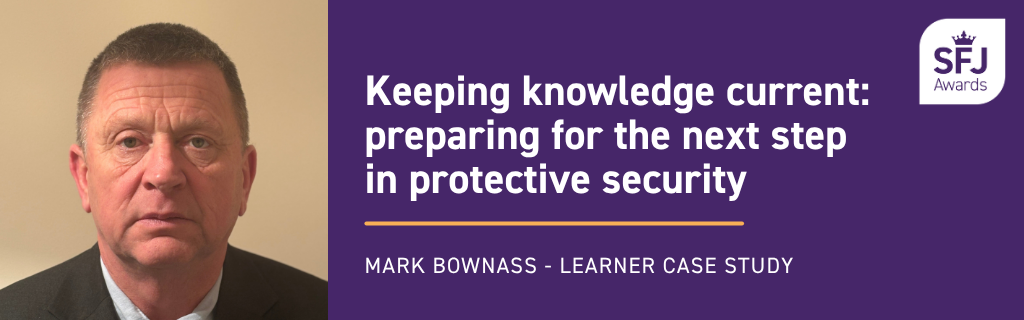
Experience can provide a strong foundation, but in an area as important and fast-moving as counter-terrorism and protective security, there is always more to understand.
For one learner, Mark Bownass, with a background in policing, the decision to take the Level 3 Award in Counter-Terrorism Protective Security and Preparedness was about looking ahead.
“I took this qualification for my own personal development, which will help me in my current role but will also help me with my future plans to branch out into consultancy.”
Refreshing experience with current knowledge
The National Counter-Terrorism Security Office (NaCTSO) endorsed SFJ Awards Level 3 Award in Counter-Terrorism Protective Security and Preparedness is designed to support individuals in developing the knowledge and understanding needed to contribute to protective security and preparedness.
Mark’s previous experience provided valuable context for the course content. But the qualification also helped bring that knowledge up to date.
“I previously worked in the police and with Counter Terrorism Policing, so I had existing understanding and awareness, but this course refreshed my knowledge and updated me on current legislation.”
One of the big legislative changes has been the passing of the Terrorism (Protection of Premises) Act 2026 – otherwise known as Martyn’s Law. It introduces a number of new responsibilities for venues, sites and organisations based on their capacity, aimed at increasing public safety and societal resilience.
Alongside refreshing their understanding, Mark also found value in developing a greater understanding of the assessment process and the structured approach required when considering risk, preparedness and protective security.
A clearer path for planning and preparedness
A key part of the Mark’s experience was the way the course’s assessment helped translate knowledge into a practical process.
The assignment provided a structured framework for approaching risk assessments and preparedness plans, something Mark found clear and straightforward to follow.
“The process of creating a preparedness plan was really helpful. It was a great guide and gave me a path to follow, making it easy to understand how to build robust and actionable plans.”
For individuals looking to build on existing experience, a structured approach can help turn knowledge into a process that can be applied consistently when considering risks, vulnerabilities and appropriate preparedness measures.
Protective security isn’t just for organisations within scope
Mark’s strongest reflections were around who could benefit from developing their knowledge in this area. While changes in legislation have placed greater emphasis on the need for certain organisations and premises to consider their preparedness for terrorist incidents, Mark believes the benefits of protective security awareness extend beyond those with specific legal responsibilities.
“I would recommend anyone who works in the field where the number of people are within scope to undergo this course as it will open their eyes.”
They also highlighted the potential value for smaller organisations.
“I would also recommend smaller organisations sending their relevant person on the course even if they don’t come under the standard tier, as it will help them review and secure their premises.”
For Mark, protective security doesn’t begin and end with whether an organisation is legally required to act. Developing a better understanding of risk, preparedness and protective measures can help organisations of different sizes take a more informed approach to protecting their premises and the people who use them.
About the qualification
The SFJ Awards Level 3 Award in Counter-Terrorism Protective Security and Preparedness supports learners to develop their understanding of counter-terrorism protective security, risk and preparedness. It was designed in collaboration with the National Counter-Terrorism Security Office and is the only qualification of its kind endorsed by NaCTSO and Counter-Terrorism Policing.
It is designed for individuals working in, or looking to develop their knowledge of, roles and responsibilities connected to protective security and preparedness, providing a structured approach to understanding and applying this important area of practice.