
What’s the difference and why does it matter?
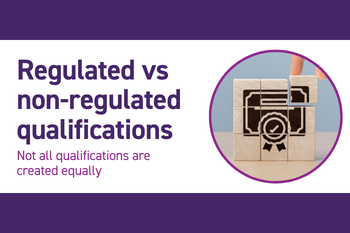
The term ‘qualification’ is used widely, but not all qualifications carry the same level of assurance or recognition. Some are regulated externally, while others are designed and awarded outside a regulated framework. Understanding the difference is important for learners, employers and training providers.
- A regulated qualification is issued by an awarding organisation that is recognised by a qualifications regulator, such as Ofqual in England, Qualifications Scotland Accreditation, Qualifications Wales or CCEA Regulation in Northern Ireland. These qualifications must meet specific regulatory requirements, including rules around qualification design, assessment, quality assurance, delivery and awarding. They are also listed on official qualification registers, allowing learners and employers to verify their status, and usually have a clear level and size.
- A non-regulated qualification or training product may still contain useful and relevant content. It may be developed by a training provider, employer, membership body or commercial organisation. However, it is not subject to the same external regulatory oversight, meaning the degree of independent assurance can vary significantly.
Why does assessment matter?
One of the key things to consider is how the qualification is assessed. A course may cover good content, but if the assessment is not valid, reliable or sufficiently robust, it may not provide certainty that the learner has genuinely met the required standard. In some cases, someone could achieve a certificate without having properly demonstrated the knowledge, skills or competence expected.
This is where regulated qualifications provide an important safeguard. They are designed so that assessment decisions are based on clear criteria, appropriate evidence and quality assurance processes that check and ensure comparability of assessment decisions. This helps protect learners, supports employers and gives confidence that achievement has been judged fairly and consistently.
This does not mean that non-regulated training has no value. Short courses, CPD programmes and employer-led training are highly useful, particularly where they meet a specific workplace or professional development need. However, learners and employers should be clear about what is being offered and what the outcome actually represents.
Before choosing a qualification or training product, it is worth asking:
- What are the main learning aims and how do they match with sector, organisational or individual training needs?
- Who awards or certificates it?
- Is it listed on an official qualifications register?
- Is it endorsed by a recognised professional body or organisation? And if so, what credibility does that bring?
- How is it assessed?
- Is the assessment appropriate for what the learner is expected to know or do?
- What quality assurance arrangements are in place?
- Will employers, professional bodies or further education providers recognise it?
Clear information helps learners make informed choices and ensures they understand the value, status and credibility of what they are working towards.
Explore our regulated qualifications →